Blogs
Know Power of Compounding with NPS to Create Multiple Corpus
Imagine you are planting a small seed today. At first, nothing much happens. But as time goes by, that seed turns into a sapling, then a tree, and eventually, a massive orchard that provides fruit for a lifetime.
In the world of money, the National Pension System (NPS) is that seed.
As we move through 2026, the financial landscape has changed, but one truth remains: One small step today helps create a massive corpus tomorrow.
Whether you are just starting your first job or are midway through your career, understanding the power of compounding within the NPS scheme is the closest thing to a "financial superpower" you can own.
How Compounding Works
Compounding is simply the process where your earnings start earning their own money. In an NPS scheme, your contributions are invested in a mix of equity and debt.
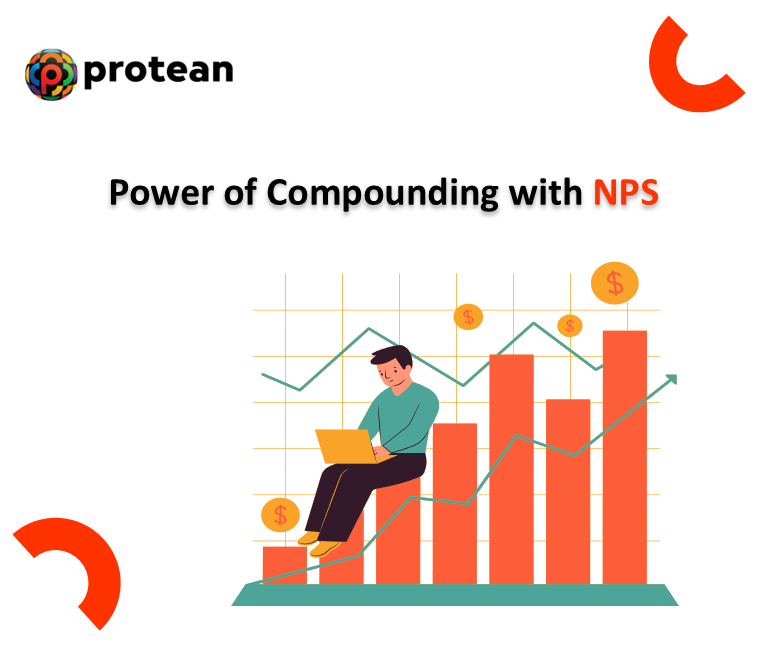
The returns you earn are reinvested, and over 20 or 30 years, this "interest on interest" snowball effect turns modest monthly savings into a multi-crore NPS corpus.
For instance:
if you start investing ₹5,000 a month at age 25, by the time you are 60, you could be looking at a mountain of wealth compared to someone who starts at age 35. Time is the most critical element—the longer you stay invested, the faster your money grows.
Why 2026 is the Best Year to Invest in NPS
The year 2026 has brought in several user-friendly updates that make the National Pension System more flexible than ever. It’s no longer just a "lock-and-forget" retirement account; it’s a dynamic wealth-building tool.
Higher Equity Exposure for Better Growth
Previously, investors were often cautious about how much they could put into the stock market. In 2026, the NPS scheme allows for more aggressive equity (stocks) allocation. Since equity historically outperforms other assets over the long run, this helps your money compound at a much higher rate.
The New "80:20" Rule for More Freedom
One of the biggest updates this year is the increased liquidity. For non-government subscribers, the rules now allow you to withdraw up to 80% of your total corpus as a lump sum at retirement (with 60% being tax-free and the additional 20% being taxable), leaving only 20% for a monthly pension (annuity). This gives you the "power of the big check" to fund your dreams—be it travel, a new home, or starting a business.
Extended Growth Until Age 85
Who says you must stop growing your money at 60? In 2026, you can choose to keep your funds invested and compounding until the age of 85. This "Extended Compounding" phase can significantly multiply your final wealth if you don’t need the money immediately.
Saving While You Grow
One of the biggest draws of the National Pension System is the tax benefit. It is one of the few investment vehicles in India that offers tax benefits:
- Section 80CCD(1) (within the 80C limit): Your contributions are eligible for a deduction of up to ₹1.5 lakh under the Old Tax Regime.
- Section 80CCD(1B): You get an additional tax benefit of ₹50,000 specifically for NPS under the Old Tax Regime. This is over and above the 80C limit!
- Employer Contributions (80CCD(2)): If your company contributes to your NPS, you can claim further deductions (up to 14% of salary under the New Tax Regime), making it a massive win for salaried professionals.
Essentially, the government is paying you (in the form of tax savings) to save for your own future.
Strategic Moves: Active Choice vs. Auto Choice
The NPS isn't a "one size fits all" plan. You get to decide how your money is managed:
- Active Choice: You act as the pilot. You decide exactly what percentage of your money goes into Equities (E), Corporate Bonds (C), Government Securities (G), and Alternative Investment Funds (A).
- Auto Choice: You set it on "Autopilot." The system automatically shifts your money from aggressive assets (stocks) to safer ones (bonds) as you get older.
In 2026, The Auto Choice models ensure your NPS corpus is protected from market volatility as you approach retirement by gradually reducing your equity exposure.
One Step Today, Multiple Corpus Tomorrow
The beauty of the NPS is its ability to create multiple streams of value. By starting today, you aren't just building a "retirement fund." You are building:
- A Lump Sum (with up to 60% of your corpus being tax-free) to handle big life goals.
- A Monthly Pension for a stress-free lifestyle.
- An Emergency Safety Net through partial withdrawal rules for health or education.
Your Next Step to Financial Freedom
The best time to start an NPS account was ten years ago; the second-best time is today.
The math is simple: Time + Consistency = Wealth.
Think of your NPS corpus as a gift from your current self to your future self. By making that first contribution in 2026, you aren't just following a tax benefit trend; you are building a foundation of dignity and independence.
Every rupee you invest now is compounding day and night to ensure that when you finally decide to hang up your professional hat, your lifestyle doesn't have to change.
One small investment in NPS today is the bridge to a worry-free tomorrow.
Frequently Asked Questions (FAQs)
Q1: Is the NPS scheme safe to invest in?
Yes, the National Pension System is highly secure. It is regulated by the PFRDA (Pension Fund Regulatory and Development Authority) and managed by professional fund managers from India’s top financial institutions.
Q2: Can I withdraw my NPS corpus before I turn 60?
While NPS is a long-term product, you can make partial withdrawals (up to 25% of your contributions) after 3 years for specific reasons like higher education, marriage of children, or purchasing a house.
Q3: Can I open an NPS account for my children?
Yes! With the introduction of NPS Vatsalya, you can now start an NPS account for minors. This allows the power of compounding to work for them for over 40-50 years, potentially creating a massive wealth base by the time they start their careers.
Q4: How is the 80CCD(1B) tax benefit different from 80C?
Section 80C has a limit of ₹1.5 lakh which includes PPF, ELSS, and Life Insurance. Section 80CCD(1B) provides an extra deduction of ₹50,000 exclusively for NPS, allowing you to claim a total deduction of ₹2 lakh under the Old Tax Regime.
Related Articles